

Myofascial Release can also be referred to as Connective Tissue Massage. The techniques target the fascia which is the connective tissue that lies underneath the skin and wraps around each muscle allowing them to glide over each other. "The fascia forms the largest system in the body as it is the system that touches all the other systems" (James L.Oschman, PhD).
Fascial restrictions can be caused by over use or misuse, trauma, poor healing, pain, injury, postural or poor mechanics. Fascia has 6-10 times more sensory signals than muscle meaning that it's highly sensitive. It can feel tight, a sensation of tugging, pulling or burning can be experienced as well as pain which will result in restricting mobility and unbalanced force production.
The myofascial release techniques used target the fascia, stretching and breaking any sticky micro-adhesions between the layers. It can feel like a friction burn sensation which eases as the fascia unsticks. It can also feel like pins and needles or human nails running over the skin.
Tools such as Rocktape® Rockblades and Rocktape® Rockpods can be used to specifically target the fascia to lift and stretch (depending on which tools) and break the micro-adhesions. During a V-Active Therapy appointment these can form part of soft tissue injury treatments.

Soft Tissue Release is a versatile technique ideal for injuries such as tendon injuries. It can provide fast and effective release for tight muscles. It can help restore muscle balance, improve movement patterns and postural alignment. STR is applied with a lock and stretch technique. The lock is applied away from the injured tissue on the specific muscle and movement either by the therapist or by the client is used to stretch the targeted tissue to elongate the fibres. This is a gentle technique ideal as part of soft tissue injury treatments which can aid in restoring normal range of movement to a targeted area. It is also used as an alternative to an NMT.
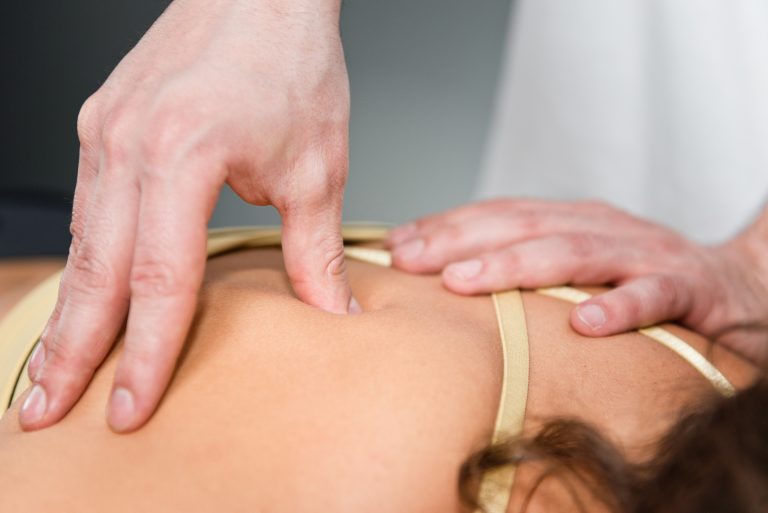
Neuromuscular techniques are applied to tender or trigger points. Most people refer to them as knots and the larger they are, the more muscle fibres are affected. The fibres become short and tight and cause pain which can also be referred elsewhere such as from the top of the shoulder (upper trapezius) into the neck (levator scapulae).
In the most simplest of terms, pressure is applied to the trigger point in order to change the neuro-messages being sent and received to the area. The muscle fibres gradually relax during the technique and on releasing the pressure. Trigger points occur for many reasons.
If you suffer from chronic stress conditions, you have bad posture, overuse muscles such as working on a laptop, sleep disturbance, joint mobility problems or injuries, even lack of exercise can cause trigger points.
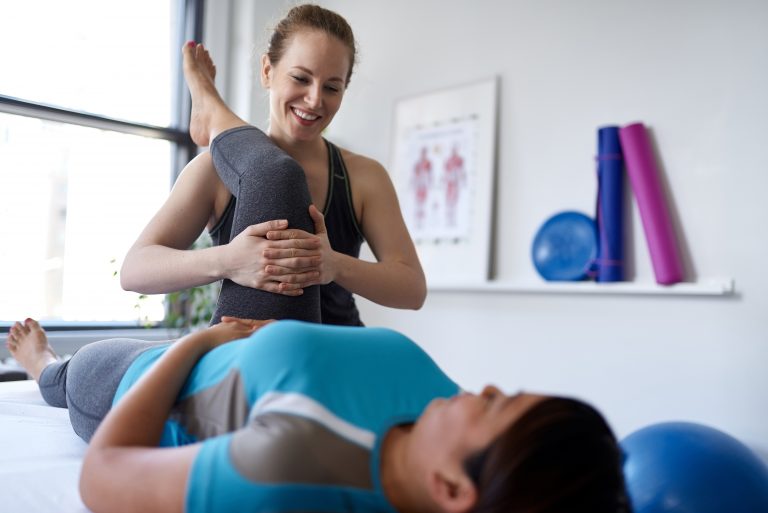
Muscle Energy Techniques or Post Neuromuscular Facilitation are both the same umbrella terms for two methods: PIR - post-isometric relaxation or RI - Reciprocal Inhibition. These are stretching techniques where the client will be required to contract a set of muscles such as the hamstrings during a stretch position.
The muscles are actively used in a specified direction whilst held in a controlled position. An opposing counterforce prevents any movement during the muscle contraction stage. This is a really effective method of stretching but cannot be used for injured tissue unlike STR.
The techniques can strengthen weak muscles, restore normal tone in tight muscles, improve musculoskeletal function and increase joint mobility. The ultimate goal however, is to improve the "normal" range of movement of a joint.